Tokyo’s greatest luxuries rarely shout. They whisper—behind noren curtains, above lantern-lined alleys, and within suites where shoji screens filter the city’s glow into soft geometry. “Secret luxury” here is a choreography of privacy and precision: a keycard elevator that opens into a lobby perfumed with hinoki, a butler who anticipates your jet-lag tea before you ask, a chef’s counter with only six seats and a menu written in the moment. This is indulgence that hides in plain sight, a world where ritual, restraint, and rare access become the most coveted amenities of all.
Hidden Ryokan Chic in the Heart of the City
Slip through a discreet entrance—no marquee, only a lacquered sign—into a modern ryokan that translates centuries of omotenashi into urban calm. Tatami underfoot, a cedar-scented furo warming the bones, and a silent tea service set by a tokonoma alcove: the city’s tempo dissolves. Suites layer washi textures with contemporary craft; minibars swap neon labels for single-origin sencha and seasonal wagashi. Breakfast arrives quietly, each lacquered tray a still life of pickled plum, charcoal-grilled fish, and cloud-like tamagoyaki. You don’t “check in” so much as enter a slower dimension where time is steeped, not spent.
Skyline Sanctuaries Above the Neon
In tower sanctums perched thirty, forty, fifty floors up, the city becomes abstract art—river grids, expressway ribbons, pixel constellations. Floor-to-ceiling windows frame Mount Fuji at dawn and a meteor shower of headlights at night. Interiors lean toward architectural minimalism: stone, paper, steel; nothing extraneous, everything intentional. Press a tablet and panels glide, revealing a soaking tub aligned to the skyline. A nightcap arrives: yuzu-kissed highball, cut crystal beading with frost. Here, luxury is measured not by volume but vantage—the feeling that you alone have the city cupped in your hands.
Culinary Rituals, Quiet Theaters of Taste
Secret counters. Invitation-only tasting rooms. A private kappo where the chef places a single sliver of sea bream and waits for your eyes to brighten. Tokyo’s culinary hush makes exclusivity taste like clarity. Omakase unfolds as a narrative—brine, sweetness, smoke, umami—paced by the chef’s breath, not the clock. In-suite dining is equally meticulous: ceramics matched to the dish, chopsticks of red sandalwood, a seasonal saké decanted at precisely the right chill. Breakfasts favor terroir—Hokkaido dairy, Niigata rice, Shizuoka tea—so each bite maps a quiet geography of Japan.
Onsen & Wellness, Urban Rejuvenation
True indulgence is recovery. Retreats weave wellness into the blueprint: low-lit corridors, hinoki tubs, and steam rooms steeped in kuromoji. Therapists work like calligraphers, their strokes confident and spare. Some suites feature private onsen-style baths of mineral-rich water; others offer meditation niches where a single ikebana arrangement sets the breath’s cadence. Fitness studios float above rooftops, their treadmills facing sunrises, while infrared saunas and cold-plunge pools recalibrate circadian rhythms. Leave with shoulders lowered, senses clarified, and the precise kind of fatigue that means you have finally, beautifully, exhaled.
Q&A: Planning Your Secret-Luxury Tokyo Stay
What neighborhoods best fit the “secret luxury” mood?
Kanda and Otemachi for hushed business-district evenings; Nihonbashi for heritage alleys and traditional craft; Kioicho and Akasaka for diplomatic poise; Marunouchi for polished convenience steps from the Imperial Palace; Toranomon for next-gen towers that feel like private clubs.
When should I visit for the calmest experience?
Late January to early March and mid-November to early December. You’ll find crisp air, softer crowds, and easier access to coveted dining counters and spa slots.
How do I secure hard-to-book dining?
Work through the hotel’s concierge well in advance. Tokyo concierges maintain trusted relationships with intimate counters and can match your palate to the chef’s style—often unlocking last-minute seats that never hit reservation apps.
Is language a barrier to a seamless stay?
Not in this tier. Staff are bilingual, signage is intuitive, and every ritual—from bath etiquette to dining pacing—is gently guided without fuss or fanfare.
What should I pack to suit the city’s discreet elegance?
Neutral layers, soft tailoring, leather sneakers or sleek loafers, and a compact umbrella. In-room loungewear is typically provided; bring swimwear if your retreat includes a pool or onsen.
Which hotels should I consider?
- Aman Tokyo — Monumental serenity, cathedral-like spa, and cinematic views.
- Hoshinoya Tokyo — Modern ryokan purity with onsen and tatami-clad grace.
- Bulgari Hotel Tokyo — Jewel-box glamour above the skyline, exquisite dining.
- Mandarin Oriental, Tokyo — Sky-high gastronomy and refined service.
- The Capitol Hotel Tokyu — Under-the-radar design, tranquil gardens, statesmanlike poise.
- The Okura Tokyo (Heritage Wing) — Mid-century lineage, museum-quiet interiors, impeccable craft.
- The Prince Gallery Tokyo Kioicho — Artistic vistas, light-washed suites, contemporary polish.
- Andaz Tokyo Toranomon Hills — Creative energy, rooftop bar, and relaxed sophistication.
- Palace Hotel Tokyo — Moat-side calm, balconies (rare in Tokyo), and restorative green views.
Conclusion: Where Privacy Becomes the Ultimate Privilege
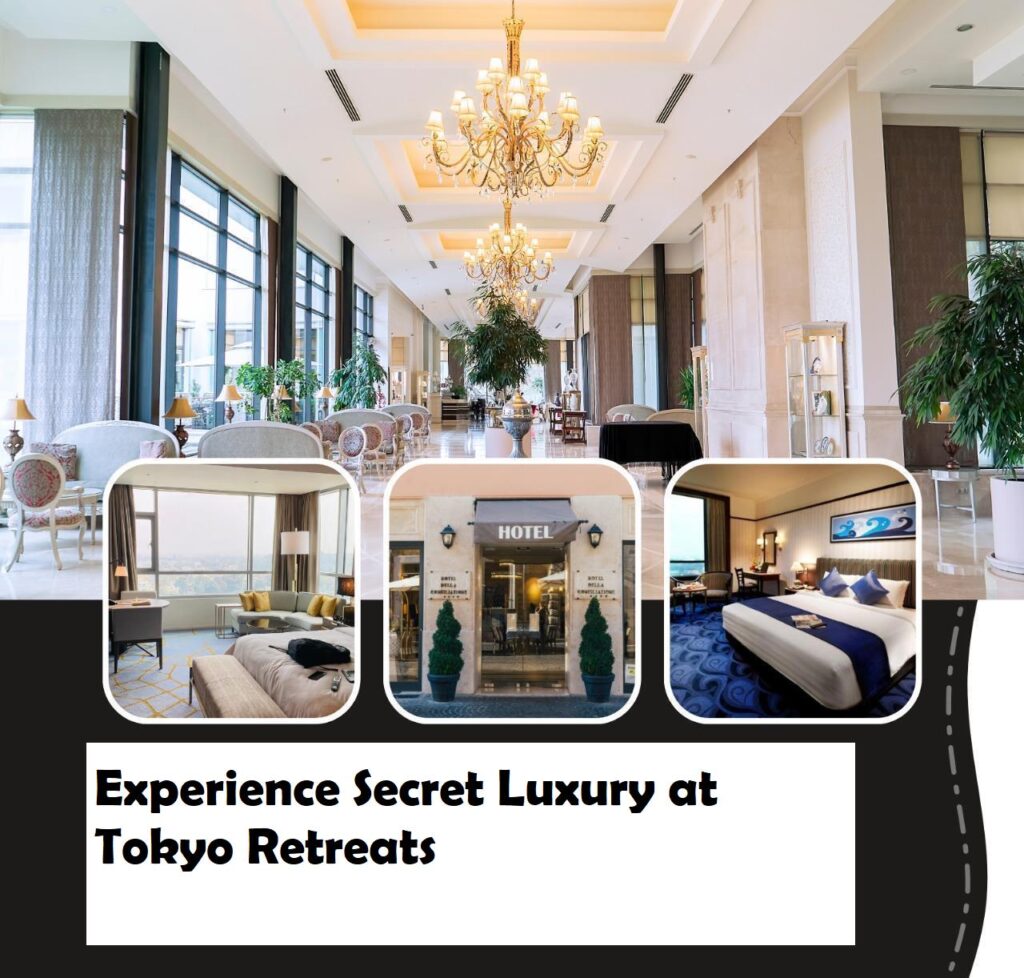
“Experience Secret Luxury at Tokyo Retreats” is an invitation to let the city serve you in whispers. Above the neon, behind cedar doors, and within rooms tuned like instruments, you’ll find service that arrives a breath before need, flavors that speak softly but stay, and spaces that reset your sense of time. In Tokyo, exclusivity isn’t performance—it’s precision. And once you’ve lived inside that quiet, nothing else feels quite as luxurious again.
