There’s a particular kind of hush that falls when a heavy palazzo door swings inward: a cool breath of travertine, the faint echo of a fountain, the glint of frescoed ceilings catching daylight like old gold. “Step Inside History at Rome Palazzos” is an invitation to live inside that hush. Here, hospitality isn’t just service—it’s stewardship. Between cobblestone lanes and marble-columned courtyards, you’ll find salons where cardinals once negotiated, libraries where poets scribbled margins, and loggias that frame the city like a stage. A stay in a Roman palazzo doesn’t merely place you near monuments; it turns the building itself into your daily wonder—an experiential museum where you are both guest and gentle protagonist.
Baroque Splendor, Candlelit and Gilded
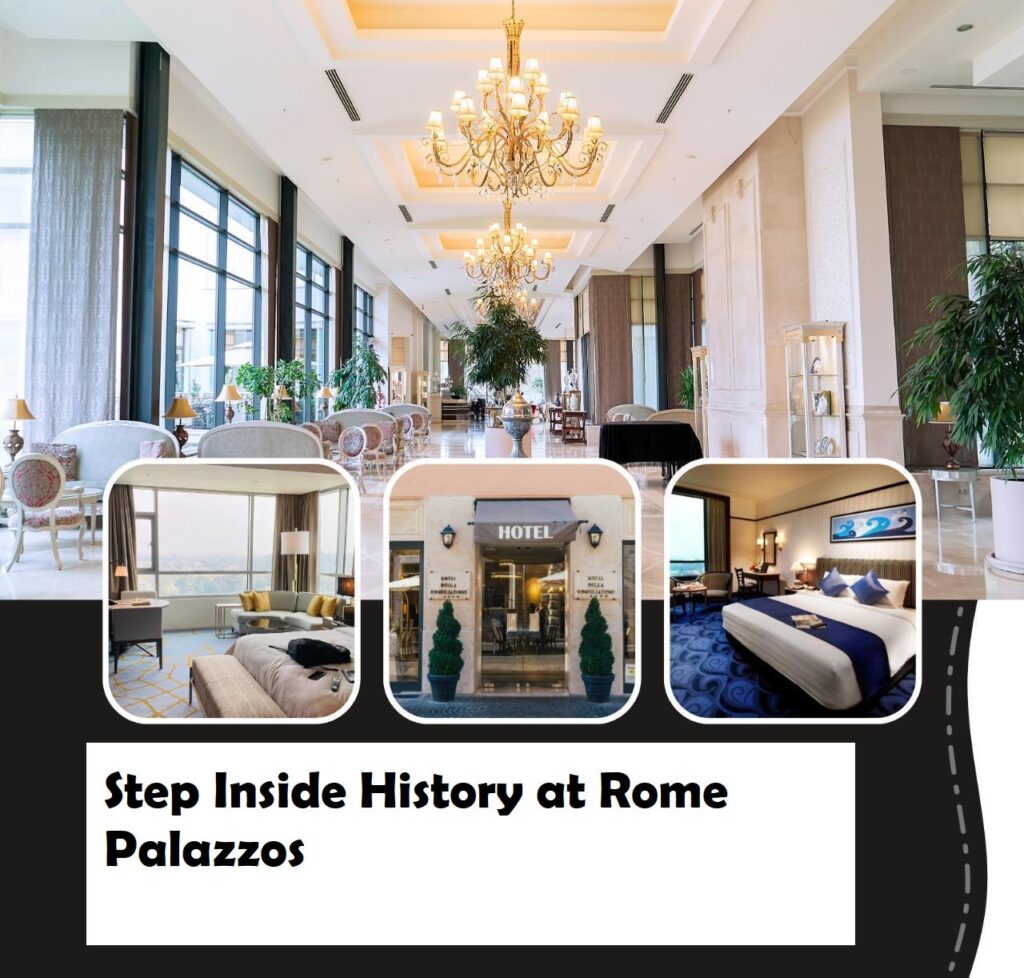
Choose a palazzo defined by Baroque bravura and you’ll be greeted by theatrical staircases, chandeliers that float like constellations, and stucco cherubs swooping across vaulted ceilings. The décor is voluptuous yet human, all curves and warm patina, designed to flatter candlelight as much as the midday sun. Suites might pair damask walls with contemporary Italian furniture—an elegant dialogue between centuries—while bathrooms gleam in bookmatched marble. Breakfast arrives beneath painted allegories of Rome’s virtues; your cappuccino steams beneath a ceiling that has watched four hundred years of mornings. In the evening, a sommelier uncorks Lazio reds in a salon filled with antique portraits and low conversation. This is history made intimate, sumptuous without shouting.
Renaissance Courtyards & Whispering Fountains
Another mood lives in the Renaissance palazzo: symmetry, proportion, and poise. Expect cloister-like courtyards where orange trees scent the air and water murmurs in stone basins. Guestrooms wrap these inner sanctums, so even the buzziest neighborhoods feel worlds away once you cross the threshold. Terracotta floors, coffered beams, and linen-draped windows soften the geometry into serenity. Breakfast might be served among columns, with sunlight tilting across the paving stones like a sundial. After a morning of Caravaggios and Berninis, return to that courtyard to reset—an espresso in hand, a book on your lap, and the quiet pleasure of having nowhere else to be. Here, luxury is equilibrium: beauty pared back to balance and breath.
Private Galleries & Crafts Reborn
Rome’s palazzi are guardians of art—and many transform that heritage into creative hospitality. Some display private collections inside corridors and salons; others commission contemporary pieces that speak to frescoes overhead. You may join an after-hours tour led by an in-house curator, peering at gilt frames and learning who once lived behind those eyes. Workshops revive Roman crafts—papier-peint, mosaic, marble inlay—so you leave with more than photographs: you leave with a story your hands helped make. Dining is equally expressive, from candlelit tasting menus in former libraries to rooftop breakfasts served on hand-painted ceramics. The narrative thread is craftsmanship—centuries of it—braided into a thoroughly modern stay.
Terraces Above the Eternal City
A final chapter unfolds on the roof. Terraces float above cupolas and terracotta seas, where early light gilds the Tiber and dusk lights up the Forum like embers. Order a spritz at golden hour and watch swifts loop around domes, or book a private dinner with the Colosseum a silhouette on the horizon. Some terraces add plunge pools, herb gardens, or tiny observatories; all offer the best souvenir Rome can give—perspective. Up here, you feel the layers: ancient street plan, Renaissance façades, modern life gliding between. Then you slip back downstairs to your suite, and the door closes softly on the city’s bustle.
Q&A: Plan Your Palazzo Escape
What makes a palazzo stay different from a standard luxury hotel?
Authenticity and architecture. You’re inside a historic residence shaped by Rome’s families and artists, with proportions, materials, and stories you simply can’t replicate in new builds.
Which palazzo-style hotels should I consider?
Try a curated shortlist:
- Palazzo Manfredi — boutique intimacy with iconic archaeology nearby.
- Anantara Palazzo Naiadi — grand scale at Piazza della Repubblica with neoclassical drama.
- Palazzo Dama — youthful elegance in a noble residence near the Tiber.
- Villa Spalletti Trivelli — townhouse refinement and a tranquil garden by the Quirinale.
- G-Rough — design-forward suites inside a 17th-century building steps from Piazza Navona.
When is the best time to visit?
Aim for shoulder seasons—April to June and September to October—for softer light, gentler temperatures, and more breathing room in museums and squares.
What room features should I request?
Ask for high ceilings, period details (fresco fragments, original beams), and a courtyard or terrace outlook. If you’re sensitive to sound, courtyard-facing rooms are often the quietest.
How do I build an itinerary around my palazzo?
Let the house set your rhythm. Morning coffee in the courtyard, a short walk to nearby masterpieces, a long lunch in a trattoria, and a late afternoon rest under the frescoes. Reserve evenings for rooftop cocktails and a stroll along the Tiber.
Conclusion: The Luxury of Belonging
To step inside a Roman palazzo is to borrow a key to time. You inhabit rooms that have matured, not aged; you sleep beneath ceilings that still hold their breath for stories. This is exclusivity defined less by velvet ropes than by resonance—the privilege of belonging, briefly, to a building that has outlived empires and trends. Book a palazzo, and your itinerary becomes wonderfully simple: wake to history, wander through art, return to grace. In a city of marvels, your most unforgettable monument may be the one you’re lucky enough to call home for a few nights.
