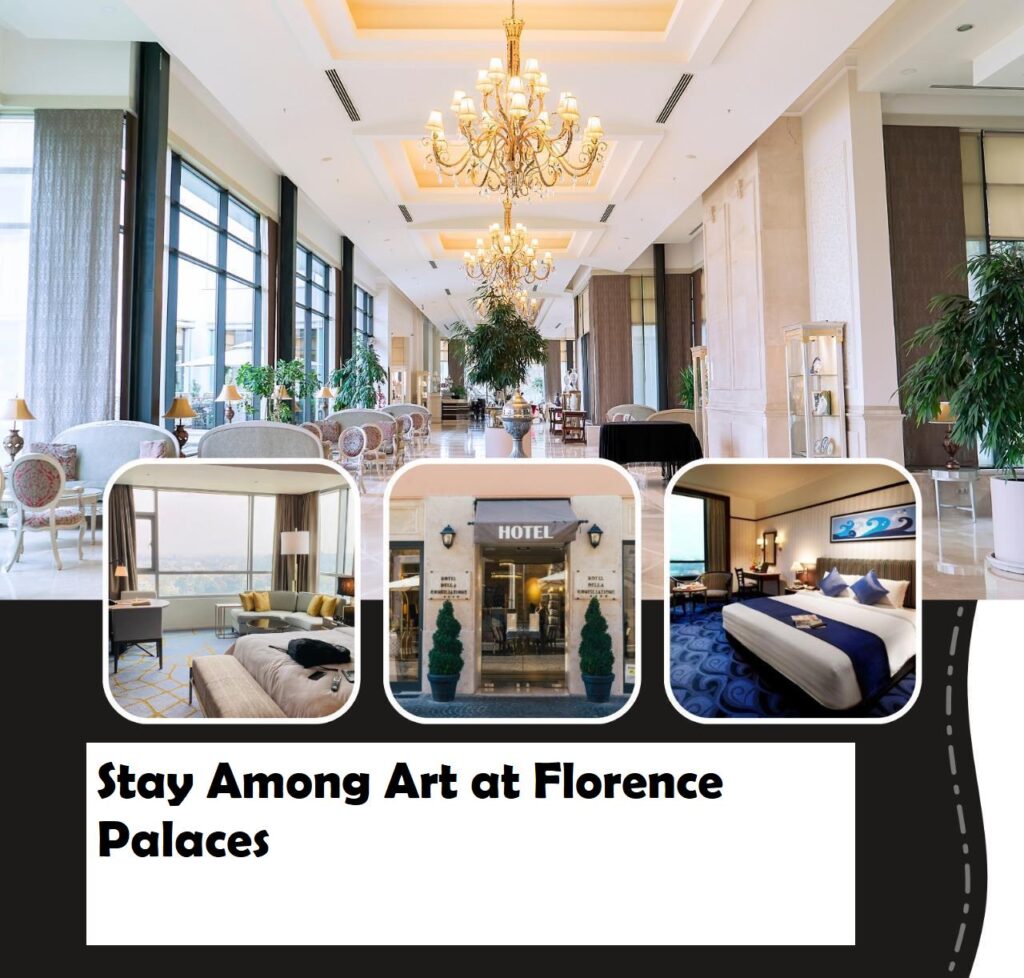
Florence is a city where masterpieces are not confined to museums—they spill into courtyards, line private corridors, and bloom across the ceilings of grand palazzi. “Stay Among Art at Florence Palaces” is an invitation to make the cradle of the Renaissance your temporary home, to swap the velvet rope for a room key, and to let the city’s beauty greet you when you wake. From frescoed salons to lemon-scented gardens, these residences preserve centuries of craft while welcoming modern travelers with thoughtful comfort. The reward is intimacy: hearing church bells drift over the Arno at dawn, reading beneath a glazed terracotta frieze, and returning from the Uffizi to your own gallery of marbles and canvases.
Renaissance Reverie Suites
Set inside restored palazzi, suites here are designed like chapters in an art book. Walls carry soft limewash, punctuated by carved stone fireplaces and wood-beam ceilings. Antique commodes support contemporary objets, and fabrics echo Botticelli blues and Sienese gold. Many rooms keep original fresco fragments or pietra serena arches; others frame the Duomo’s dome like a living painting. Expect light that changes through the day—cool and pearly in the morning, warm and honeyed by late afternoon—making even a quiet desk feel gallery-lit.
Medici Grandeur, Modern Ease
Palace hospitality in Florence pairs historic detail with gently hidden technology. Underfoot, centuries-old parquet is restored rather than replaced. Behind the scenes, climate control hums silently; marble bathrooms gain rainfall showers; lighting scenes highlight art without heat or glare. Concierges are stewards more than staff—arranging skip-the-line entries, noting today’s best artisan workshops across the river, and securing tastings with boutique producers. The effect is respectful: the building feels itself, and you feel cared for.
Courtyard Secrets and City Views
Part of the joy in a Florentine palazzo is what you don’t see from the street. Heavy doors open to cloistered courtyards where ivy climbs stone and a single fountain cools the air. Breakfast may unfold here among lemon trees, or on a terrace that looks toward Santa Maria del Fiore. Some palaces back onto private gardens—rare pockets of green threaded with gravel paths—offering a serene counterpart to the bustle of Via de’ Tornabuoni or Piazza della Signoria.
Private Galleries & After-Hours Access
Many properties curate rotating collections: drawings by local academies, sculpture on loan, or contemporary photography that dialogues with the past. A few collaborate with guides and custodians to offer privileged experiences—quiet evening tours of lesser-known chapels, artisan studio visits in the Oltrarno, or sunrise entries when statues and altarpieces feel newly awakened. Back at the palazzo, a salon may host a short talk on Florentine color or the techniques behind scagliola tabletops, turning cocktail hour into a miniature masterclass.
Tuscan Taste, Palazzo Plate
Dining extends the art narrative. Plates arrive like compositions—white beans, new olive oil, shaved pecorino, the season’s porcini. Wine lists lean toward Chianti Classico and Brunello, with a respectful nod to small biodynamic makers. Some hotels set tables beneath fresco cycles; others open a loggia to the evening air so that dinner comes with church silhouettes and lantern glow on stone. Breakfast celebrates simplicity: figs, ricotta, just-baked schiacciata, and coffee pulled to that sweet Florentine balance.
Q&A + Nearby Recommendations
Q: What neighborhood is best for an art-focused stay?
A: For museum access, stay near the Duomo–Uffizi–Santa Croce triangle. For artisans and a more local rhythm, choose the Oltrarno (south of the Arno) close to Santo Spirito and the Pitti Palace. Both offer palatial options within a 10–15 minute walk of major sites.
Q: When are galleries and palaces least crowded?
A: Late autumn through early spring (November–March) brings softer crowds. Regardless of season, book timed entries and target early morning or late afternoon slots; Mondays can be quieter for certain smaller spaces.
Q: Are palazzo hotels suitable for families?
A: Yes—many offer connecting rooms, garden suites, and relaxed lounges where children can unwind. Ask about tailored museum routes or sketchbook kits to keep younger travelers engaged.
Q: What signature experience should I request?
A: A private guide for a focused theme—portraiture, Medici power, or sculptural marble—paired with an artisan visit (goldsmith, paper marbler, or frame maker). End with aperitivo on a terrace as the city turns gold.
Q: Other palatial-style hotels to consider?
- Four Seasons Hotel Firenze — A restored noble estate with vast historic gardens and frescoed halls; tranquil yet close to the center.
- St. Regis Florence — Riverfront elegance with classic salons and attentive butler service; ideal for Arno sunsets.
- Villa Cora — A grand 19th-century residence near the Boboli Gardens with ornate interiors and seasonal pool.
- Palazzo Vecchietti — Intimate suites inside a historic residence steps from top boutiques and sights.
- Portrait Firenze — Contemporary-luxe on the Arno with curated design and postcard views.
Conclusion: Your Own Chapter in the Renaissance
Choosing a palazzo stay in Florence is more than booking a room; it’s electing to live inside the city’s story. The architecture becomes your companion, art becomes your daily atmosphere, and service is shaped to reveal Florence at its best—unhurried, exacting, and generous. You leave with memories that feel finely made: the hush of a courtyard, the curve of a staircase, the way morning light finds a frescoed angel just so. This is the privilege promised by “Stay Among Art at Florence Palaces”—an exclusive, quietly glamorous experience where history and hospitality meet, and where every moment feels museum-worthy without ever being behind glass.
