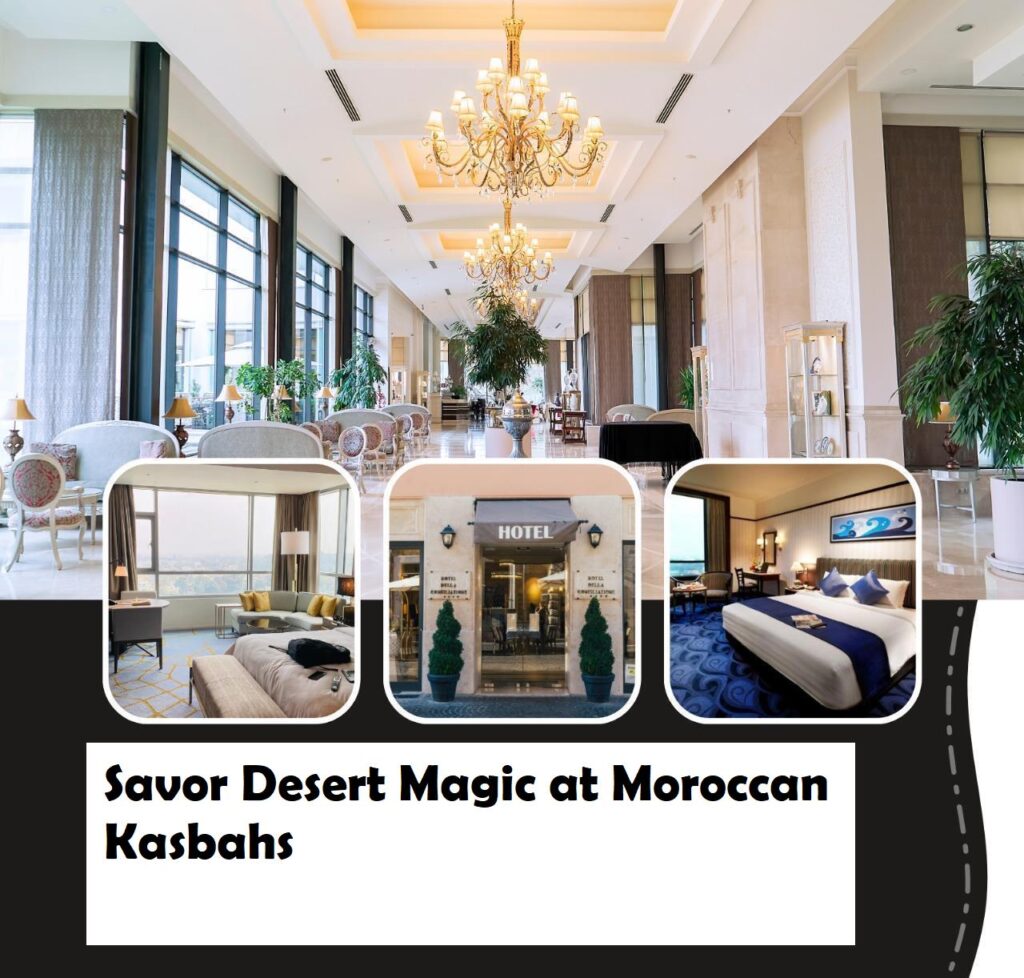
When you picture Morocco’s kasbahs, think sun-warmed walls the color of cinnamon, palm-lined courtyards perfumed with orange blossom, and night skies that spill with stars. “Savor Desert Magic at Moroccan Kasbahs” invites you into places where hospitality is quiet and precise, where rituals—mint tea poured high, bread baked on hot stones, lanterns lit at dusk—turn simple moments into memory. These earthen fortresses aren’t just accommodations; they’re timekeepers. Within their thick walls, heat eases, conversations linger, and the pace slows to the rhythm of desert light.
Earthen Walls, Eternal Horizons
Kasbah architecture is more than a look—it’s a climate strategy perfected over centuries. Adobe bricks and rammed earth absorb heat by day and release it at night, creating natural comfort that technology struggles to match. Step through a cedar gate and you enter a cool hush: shaded riads, trickling fountains, and lime-washed suites trimmed with zellige tile. Rooftop terraces frame the High Atlas like a painted backdrop; at sunset, the ramparts burn gold, and the horizon stretches in layered silhouettes of date palms and dunes.
Caravan Courtyards & Spiced Evenings
Life in a kasbah gathers around the courtyard. It’s where breakfast arrives with flaky msemen, argan honey, and tart pomegranate; where midday tea restores your stride after souk wandering; where evenings begin with cumin-scented harira and end in candlelight. Many kitchens double as workshops: guests grind ras el hanout, fold brik by hand, and learn the unhurried timing that makes a tagine tender. The result is not just a meal but a sensory map—cinnamon, saffron, preserved lemon—that you’ll carry long after you leave.
Atlas Sanctuaries & Valley Trails
Kasbahs in the foothills of the Atlas Mountains trade dunes for terraces and walnut groves. Mornings start with a cool ascent to a village belvedere; guides point out irrigation channels that have fed orchards for generations. Afternoons melt into hammam hours—black soap scrub, eucalyptus rinse, orange-flower rest. Come golden hour, you’ll watch swallows stitch the sky while shepherd bells ring across the valley. Here, luxury feels grounded: hand-loomed blankets, clay amphorae of spring water, and balconies positioned for the slow theater of mountain light.
Oasis Craft & Slow Luxury
The best kasbahs honor craft without fuss. You’ll notice tadelakt walls with a soft, stone-like sheen; hand-carved cedar doors that close with a satisfying weight; woven boucherouite rugs whose colors echo pomegranate peel and henna. Amenities lean thoughtful instead of showy: ceramic carafes for filtered water, linen robes that breathe, locally made argan oil. Staff move like stagehands—present, precise, rarely seen—so your days feel unengineered, even when every element has been considered.
Moonlit Sahara Rituals
In desert-facing kasbahs, the night is the main event. After an amber sunset, the sky sharpens into a dome of constellations. Dinners shift outdoors: clay braziers glow, musicians tune guembri and oud, and the Milky Way draws an unbroken arc above the ramparts. A short 4×4 hop puts you on the dunes for sunrise—first light brushes the sand in pale apricot, then tips into copper. Back at the kasbah, breakfast lands like a reward: figs, dates, and hot bread you split with your fingers.
Q&A: Plan Your Kasbah Escape
Q: I want sweeping mountain views and easy trail access. Where should I stay?
A: Look to Atlas-view kasbahs in the Ourika or Toubkal regions. Properties like Kasbah Bab Ourika or Kasbah du Toubkal (Imlil) deliver terrace panoramas, village walks at the door, and cool evenings even in warmer months.
Q: I’m after classic desert drama—dunes, camels, and stargazing. Recommendations?
A: Base yourself near Erfoud or Merzouga. Consider Kasbah Hotel Xaluca Erfoud for resort-level comfort with easy access to Erg Chebbi, or pair a kasbah stay with a night at a luxury Sahara camp for uninterrupted skies.
Q: We’re food-motivated travelers. Which kasbahs emphasize culinary experiences?
A: Choose intimate properties with garden kitchens in Skoura or the Draa Valley—think Dar Ahlam (Skoura) for inventive menus and private desert dinners, or smaller kasbah lodges around Agdz where you can join bread-baking and spice-blending sessions.
Q: Is there a kasbah close to Marrakech that still feels rural?
A: Yes. Kasbah Tamadot in the Asni valley brings high comfort within a couple of hours of the city, combining mountain quiet with polished service and strong community ties.
Q: What’s the best season for kasbah travel?
A: Spring (March–May) and autumn (late September–November) balance warm days with cool nights. In peak summer, choose higher-altitude kasbahs; in winter, bask in crisp days and fireside evenings.
Conclusion: The Quiet Privilege of Time
“Savor Desert Magic at Moroccan Kasbahs” is ultimately an invitation to reclaim time—time to taste, to watch, to listen. Within these earthen walls, the day arranges itself around light: dawn walks, shade at noon, lantern glow at night. Service is attentive but unintrusive, comforts are tactile and genuine, and the landscape—mountain, oasis, or dune—sets the agenda. The exclusivity you feel is not about velvet ropes; it’s about space, silence, and a sense that the world outside can wait till tomorrow. In a kasbah, it usually does.
