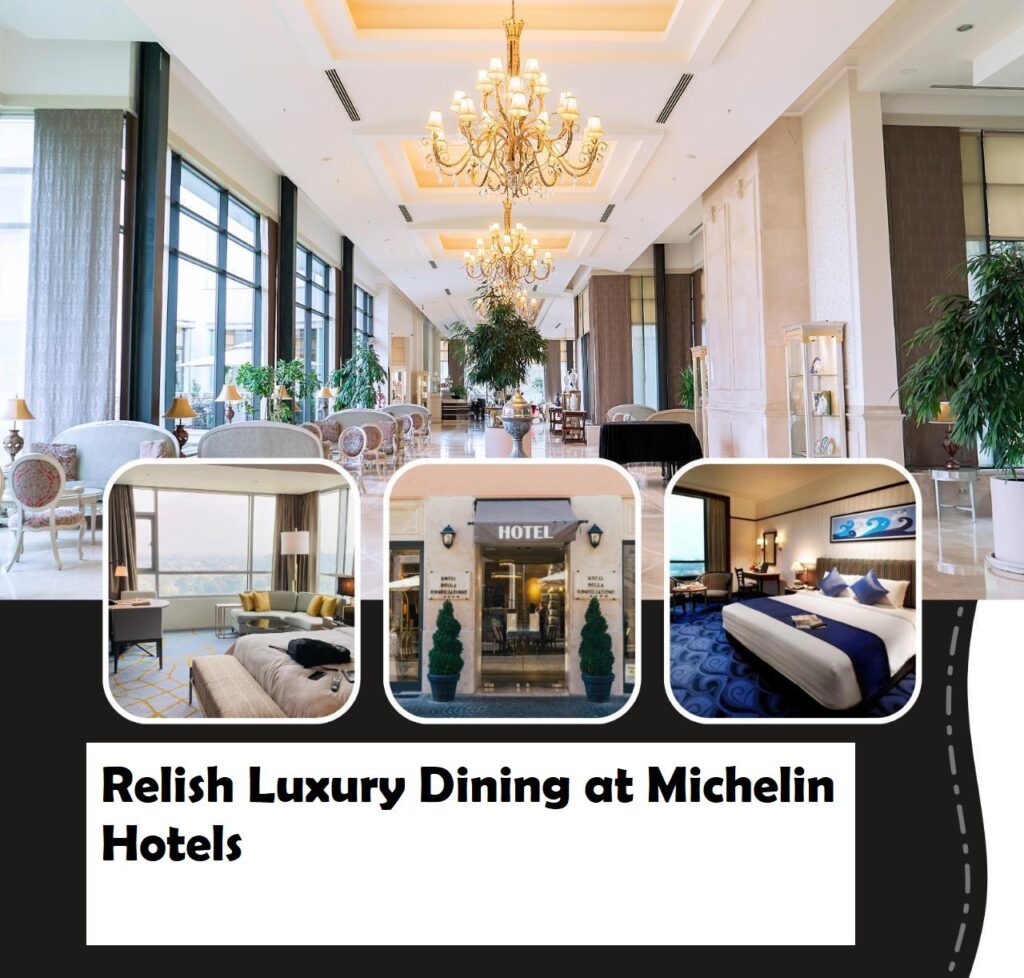
There’s a particular hush that falls over a dining room when excellence becomes inevitable—the gleam of Riedel crystal, the whisper of a trolley rolling tableside, the choreography of a brigade that knows your desires before you do. “Relish Luxury Dining at Michelin Hotels” is an invitation to inhabit that hush. In these sanctuaries, Michelin-recognized kitchens share an address with polished lobbies and pillow menus, so the night doesn’t end with dessert—it simply glides upstairs. You arrive for cuisine, but you stay for a seamless ritual: a concierge who secures the last counter seat, a sommelier who maps vintages to your mood, a suite that holds your afterglow.
Skyline Tasting Theatres
In the world’s great vertical cities, Michelin hotel restaurants turn panoramas into part of the seasoning. High above Hong Kong’s Victoria Harbour or the spires of London, tasting menus play with altitude—shellfish lacquered in citrus to mirror harbor light, or aged beef carved against a tapestry of skyline. Service moves like a string quartet: hushed, precise, cumulative. Expect a pace designed for contemplation, where the space between courses lets you watch the city sparkle into night.
Heritage Grand Dining Rooms
Elsewhere, the setting is palatial—marble foyers, gilt cornices, chandeliers that seem to keep time. In Parisian and Roman grande-dame hotels, Michelin-lauded kitchens honor tradition without becoming museum pieces. Sauces possess the depth only patience grants; soufflés rise with theater; cheese trolleys become geography lessons. A jacket is welcomed, conversation is low, and tables are set far enough apart to make privacy a luxury you can actually feel. Here, “classic” is not old—it’s evergreen.
Garden-to-Table Sanctuaries
Some hotels embrace terroir as a full-body experience. Morning begins in kitchen gardens; afternoon wanders through farmers’ markets with the chef; evening returns to a menu that reads like a seasonal diary. Vegetables take the lead, broths are feather-light, and desserts lean on orchard fruit rather than bombast. When a property can point to the hillside that grew your garnish, Michelin finesse becomes intimate—a dialogue between land, cook, and guest.
Chef’s Counter Epiphanies
And then there are the counters: twelve stools, bright knives, soft leather, the chef an arm’s length away. These hotel-within-a-hotel experiences strip away ornament and lay bare craft. A sequence might glide from pristine sashimi to smoke-kissed langoustine, to a single, perfect mouthful that changes your definition of “balance.” At the counter, eye contact is a course of its own; you leave nourished and newly curious.
Q&A with Concierge-Level Recommendations
What defines a “Michelin hotel” dining experience?
Not a star alone, but the total arc: an arrival smoothed by doormen who know your name, a dining room where choreography feels effortless, a cellar measured in decades not bottles, and a suite upstairs that completes the ritual. The kitchen’s recognition is the headline; the hotel turns it into a story worth rereading.
How far ahead should I book?
For chef’s counters and seasonal tasting rooms, reserve as soon as your travel dates are firm—four to six weeks is prudent for city icons, longer for special holidays. Ask your hotel concierge to manage waitlists; they often unlock last-minute cancellations.
Is there a dress code?
Refined smart-elegant is a safe baseline. Think tailored separates and polished footwear. If the restaurant notes “jacket preferred,” let it elevate the evening—you’ll match the room’s tone and feel more at home among the crystal and silver.
What if I have dietary preferences?
State them when booking and again on arrival. Michelin-level teams excel at thoughtful adaptations; expect re-engineered sauces, alternative broths, and adjusted pacing so your menu feels composed, not compromised.
Which hotels should I consider for a Michelin-recognized meal on property?
- Four Seasons Hotel Hong Kong — A benchmark address with multiple MICHELIN-starred venues and a cellar that thrills Burgundy lovers.
- The Connaught, London — A modern-classic townhouse where craft and grace meet across an acclaimed, Michelin-lauded dining room.
- Four Seasons Hotel George V, Paris — Grand-hotel theater with restaurants celebrated in the MICHELIN Guide and service as polished as the crystal.
- Raffles Singapore — Heritage glamour paired with contemporary finesse; book early for the house’s Michelin-recognized table.
- Wynn Macau / Wynn Palace — An empire of culinary destinations under one roof, from refined Cantonese to jewel-box counters featured by MICHELIN.
- The Okura Tokyo — Peaceful, precise, and quietly opulent; long-respected kitchens with MICHELIN-noted excellence.
How should I plan the evening around the meal?
Arrive early for a bar ritual—one aperitif, one small bite—then allow two to three hours for a full tasting. If wine pairings tempt you, consider a lighter lunch and schedule spa time the next morning. Luxury tastes better when you’re not rushed.
Conclusion: Where the Night Continues Upstairs
To relish luxury dining at Michelin hotels is to choose continuity—of welcome, of craft, of comfort. The evening doesn’t fragment into separate addresses and compromises; it flows. You cross a lobby scented with white florals, step into a room tuned for pleasure, and trust a kitchen that has earned its quiet confidence. Hours later, dessert fades into hallway hush and key-card light. Behind your suite door, the city keeps glittering, the palate stays bright, and tomorrow feels like a second sitting of the same beautiful story. Here, excellence isn’t an event—it’s an address.
