The phrase “Persian palaces” conjures a world of mirror-bright halls, turquoise domes, perfumed courtyards, and music that seems to float on the air. Journeying into these spaces is less a visit and more a soft crossing into another tempo—where time is measured in the shimmer of mosaic, the hush of a reflecting pool, and the rustle of cypress leaves. In Tehran, Isfahan, Shiraz, and beyond, royal residences, pavilions, and garden mansions unfold like chapters of a luminous manuscript, each page gilded with craft, ceremony, and poetry.
The Mirror of Light
Step into a hall where walls glimmer with a thousand tiny facets—an effect called ayeneh-kari—and feel light multiply around you. In Tehran’s historic core, the UNESCO-listed Golestan Palace complex embodies this radiance with 19th-century Qajar elegance, marble thrones, and museum-quality collections that trace Iran’s dialogue with the world. Here, the architecture is both stage and storyteller, with every panel and arch narrating power, pageantry, and refined taste. UNESCO World Heritage Centre+1
Courtyard Poetry and Whispering Water
Persian space is poetry made habitable: a shaded iwan opening to a garden, the quiet grammar of water, shade, and breeze. In Isfahan, Chehel Sotoun—“Forty Columns”—casts cedar-dark reflections across a long pool, while its frescoed halls glow with Safavid-era ceremony, receptions, and intrigue. The pavilion sits within the celebrated family of UNESCO Persian Gardens, a living treatise on symmetry, climate wisdom, and sensual calm. Wikipedia
Domes, Windcatchers, and Starlit Suites
The delight of these palaces is how deeply they converse with sky and climate. Domes gather daylight; latticed screens sift it; windcatchers pull coolness from the evening. From balcony loggias like those of Ali Qapu—perched above Naqsh-e Jahan Square—to mirrored chambers and painted salons, each room becomes a theater of light and air, made for music, poetry, and royal spectacle. Wikipedia+1
From Royal Tables to Saffron Sunsets
To walk a Persian palace is to taste hospitality: tea arriving on a silver tray, the scent of cardamom, pistachio confections, and saffron vividly tinting rice. As sunset warms the tilework and gardens drift into evening cool, you begin to understand how architecture, craft, and ritual combine to create something larger than luxury—an art of living, performed daily.
Q&A: Planning Your Palace-Inspired Stay
When is the best time to go?
Spring (March–May) brings roses and soft temperatures, while autumn (September–November) offers crisp air and clear light—both ideal for garden wandering and city strolls.
How can I experience palace ambience in a hotel?
Consider these stays that echo royal craft, setting, or scale:
- Abbasi Hotel, Isfahan – A storied 300-year-old caravanserai turned heritage hotel wrapped around a romantic garden; opt for a garden-view suite to watch evening light ripple across stucco and tile. Hotel Abbasi+1
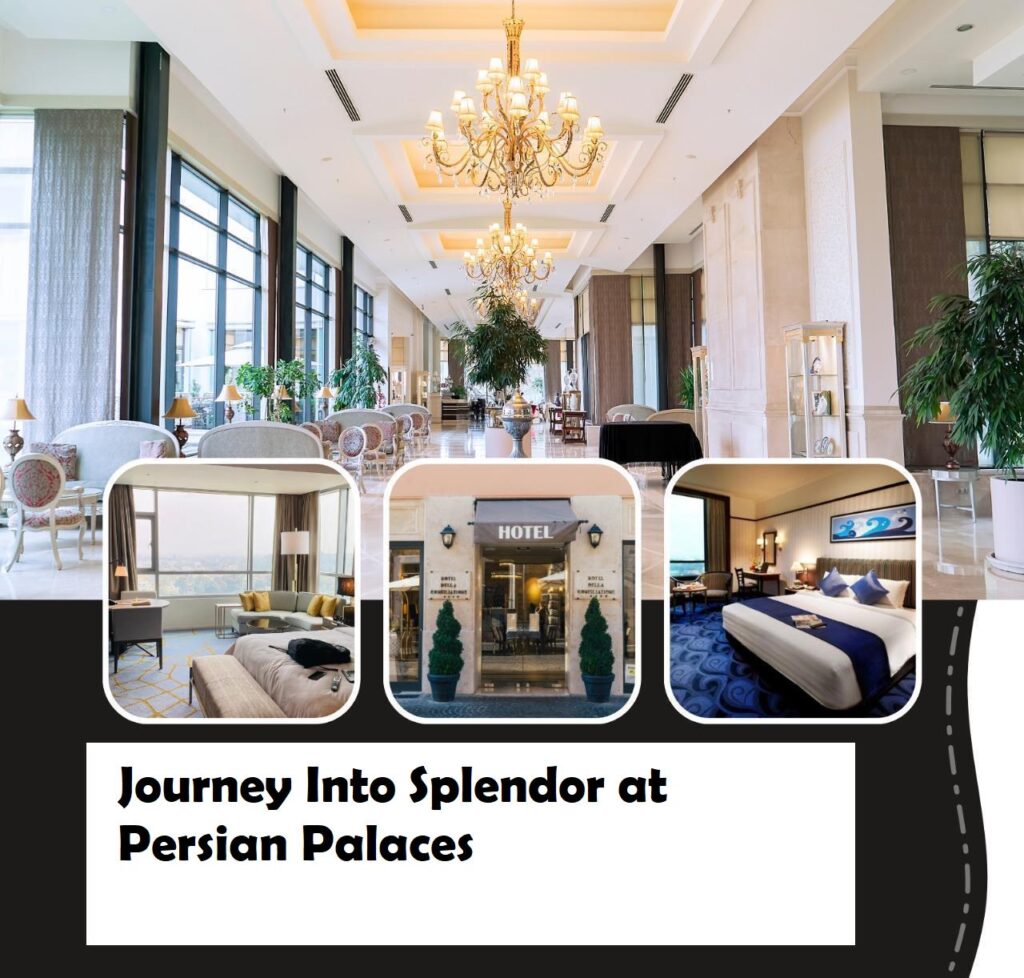
- Espinas Palace, Tehran – A modern, five-star “palace” in the city’s north with dramatic public spaces and skyline views; a sleek counterpart to historic tours. espinashotels.com+1
- Zandiyeh Hotel, Shiraz – Contemporary comfort near Shiraz’s historic sights, pairing warm service with an easy gateway to gardens and mansions. zandiyehhotel.com
- Ghasr Monshi, Isfahan – An intimate Safavid-era residence reborn as a boutique hotel—think painted ceilings, courtyards, and a personal sense of time travel. ghasrmonshihotel.com
- Laleh Kandovan Rocky Hotel (near Tabriz) – For something singular, sleep in naturally carved, cave-like suites set in a mountain village—royal drama reframed by geology. lalehhotel.com+1
What signature experiences should I seek?
- Mirror halls & frescoes: Let your eye wander across narrative paintings and mirrored mosaics—history told in pigment and glass.
- Garden hours: Arrive early or late for the loveliest light on pools and pavilions; the geometry reads differently as the sun arcs.
- Craft encounters: Look for workshops teaching tile, miniature painting, marquetry, or calligraphy—living arts that animate palace detail.
- Tea rituals: Savor black tea with rock candy in a shaded courtyard; it’s a small ceremony that captures Persian hospitality.
Any etiquette tips?
Dress modestly, move with care around fragile surfaces, and always ask before photographing people. In historic spaces, follow posted guidelines—conservation is part of the privilege of visiting.
Conclusion: Your Private Chapter in a Royal Chronicle
“Journey Into Splendor at Persian Palaces” is an invitation to inhabit beauty—to stand where kings received envoys, to hear water write its soft script under cypress shade, and to watch mosaic walls catch the last flame of day. The exclusivity here is not fenced off; it is felt in the intimacy of craft and the choreography of garden, light, and air. Whether you spend an afternoon in a mirror hall or a night in a heritage courtyard suite, you’re not just looking at opulence—you’re living inside a masterpiece, if only for a while.
